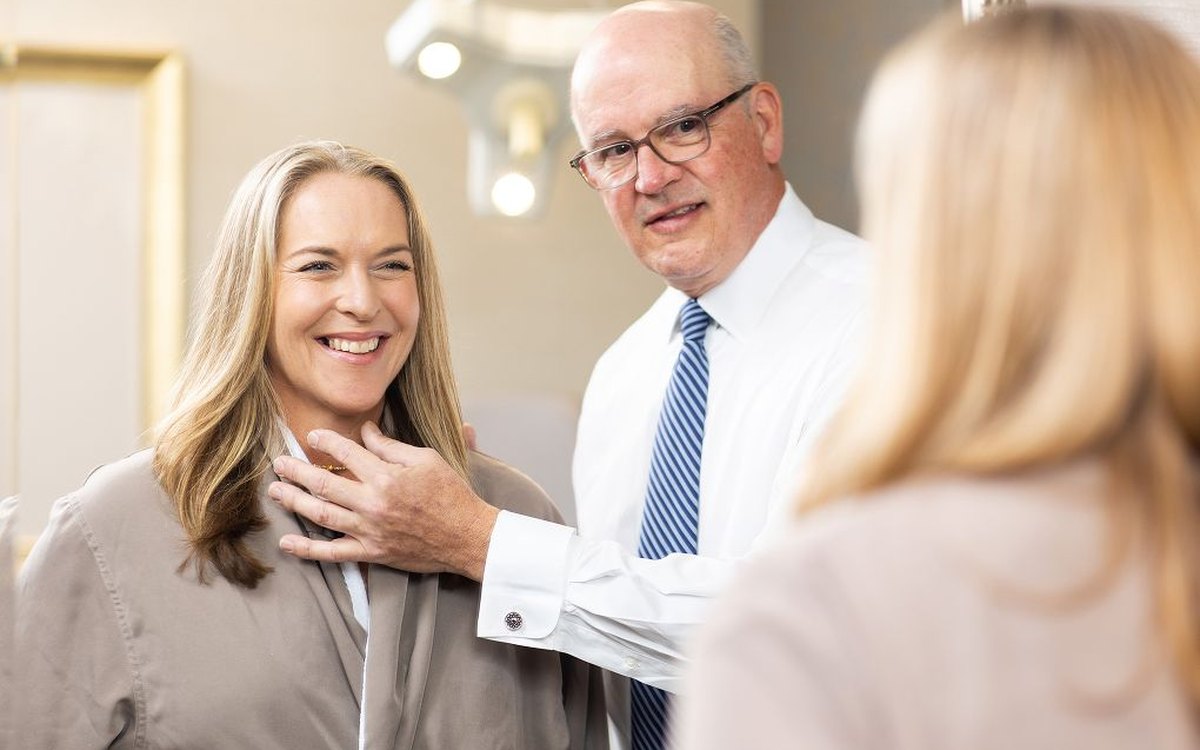

In the account of Dr. Leo Lapuerta, a triple board-certified plastic surgeon in the Houston area, female patients often arrive at consultations with a spouse or partner in the second chair. That second person, he says, often does not see the need for surgery or does not understand why the patient wants it.
He reports a different conversation months later. Once patients return to the office with the same partner after surgery and recovery, he says, his team often hears how much the operation has revitalized the patient and the relationship. The observation comes from more than 30 years of practice and more than 30,000 surgical and non-surgical procedures, and he describes it as a pattern among his female surgical patients, a group that includes mommy makeover patients.
The skeptic in the second chair
A mommy makeover is a large decision for a household. The practice combines procedures, most often a tummy tuck, liposuction and breast surgery, into one operation that runs four to ten hours, with a typical case around seven. Most women return to work within two to three weeks, and full recovery takes about six weeks in a typical case.
Those numbers land on the partner too. The practice lists a strong support system among its requirements for candidates, someone to help them until they can handle daily routines on their own, and for a patient who brings her partner to the consultation, that support may come from the person sitting beside her with doubts. A partner who sees the surgery as optional and the recovery as a burden has an understandable reason for hesitating.
The follow-up conversation
Dr. Lapuerta’s description of the later visits is specific. In his wording, S.O. stands for significant other. “The S.O. or spouse will comment on the emotional and mental health benefits they have observed in the surgical patient.”
He lists what those partners describe. “They observe greater energy, vitality, increased interest in healthy eating, exercise and a return to the vibrancy and personality of the patient’s youth.”
He also reports that partners tell him that, had they known about those non-surgical benefits in advance, they would have encouraged the surgery sooner or supported it with more enthusiasm. In his telling, the change of view comes from what the partner has observed in the patient.
Reading an anecdote for what it is
This is one surgeon’s observation from his own office, offered from decades of follow-up visits. He presents it as a pattern he hears, and it carries no promise about any single patient or any single relationship. Results vary, surgery carries risks, and the practice asks candidates to bring realistic expectations about the final results.
The anecdote fits with how Dr. Lapuerta describes his work elsewhere. He has said that he values seeing the positive effect on a patient’s daily life when she regains form and function, and he argues that a surgeon’s experience with a procedure, in cases and years, together with board certification, is the best predictor of an outcome patients are happy with. His own record includes certification by the American Board of Plastic Surgery, the American Board of Surgery and in Surgery of the Hand.
Bringing a partner into the plan
For a couple weighing a mommy makeover, the practice’s own guidance gives the partner concrete jobs. The consultation covers the patient’s goals, her medical history and the combination of procedures, along with what would happen if a pregnancy followed a tummy tuck or breast augmentation. The practice recommends the surgery for women who have completed their families, which makes future pregnancies a shared topic for the consultation. It also asks smokers to stop at least six weeks before surgery, and a woman who has given birth waits at least six months after delivery, or six months after she finishes breastfeeding.
Patients can review more than 3,000 before-and-after images of Dr. Lapuerta’s work, which gives a doubtful partner something concrete to look at during the decision.
Recovery assigns the rest. A patient goes home wearing compression garments, with limits on lifting and strenuous activity and no stomach sleeping for the first few weeks. Most mommy makeovers are same-day outpatient surgery, so the partner who drives her home that afternoon is the first person to take over the lifting, the carpool and the household jobs she has to set down for a few weeks.
This article is for general information only and is not medical advice. Results vary from patient to patient. Consult a board-certified plastic surgeon or your physician about your own situation. Written in partnership with Joseph Lambert, a publicist working with Leo Lapuerta, MD Plastic Surgery.