
Most of us think about home efficiency as a list of small daily sacrifices. We turn down the thermostat until we are wearing sweaters in the living room, remind our kids to shut the refrigerator door, and swap out every lightbulb for an LED. While these habits are certainly helpful, they only address the consumption side of the equation. They do not change the fundamental way your house operates.
To genuinely transform how a property functions, you have to look at the source of your power. Relying entirely on a massive, aging utility grid leaves you vulnerable to price hikes and seasonal blackouts. This is why installing solar panels has become the definitive upgrade for homeowners who want to run a tight, highly efficient ship. Rather than just trying to consume less, you are fundamentally changing the mechanics of your household energy management.
If you are tired of cringing every time the utility bill arrives in the mail, here is a deeper look at how generating your own electricity makes every other system in your house run better.
Creating an Active Energy Hub
A traditional house is a passive drain on resources. It sits there and pulls electricity from the grid all day and night. Adding a renewable energy system flips that dynamic completely. Your home becomes an active participant in its own upkeep. By generating electricity exactly where it is being used, you eliminate the massive energy loss that happens when power has to travel miles down transmission lines from a distant power plant to your neighborhood.
This localized generation means the energy powering your dishwasher, washing machine, and television is direct and immediate. You are no longer just a meter spinning on the side of your garage. Your roof is actively working to offset the daily operational costs of your life.
The Hidden Cooling Benefit on Your Roof
When people talk about the benefits of a solar array, they almost exclusively focus on electricity. But there is a secondary, physical benefit that directly improves your home’s efficiency, and it has nothing to do with the wiring. It is thermal shading.
Your roof takes a brutal beating from the sun during the summer. That intense heat bakes your shingles and radiates directly into your attic, turning the top half of your house into an oven. This forces your air conditioning unit to work overtime just to keep the upstairs bedrooms bearable.
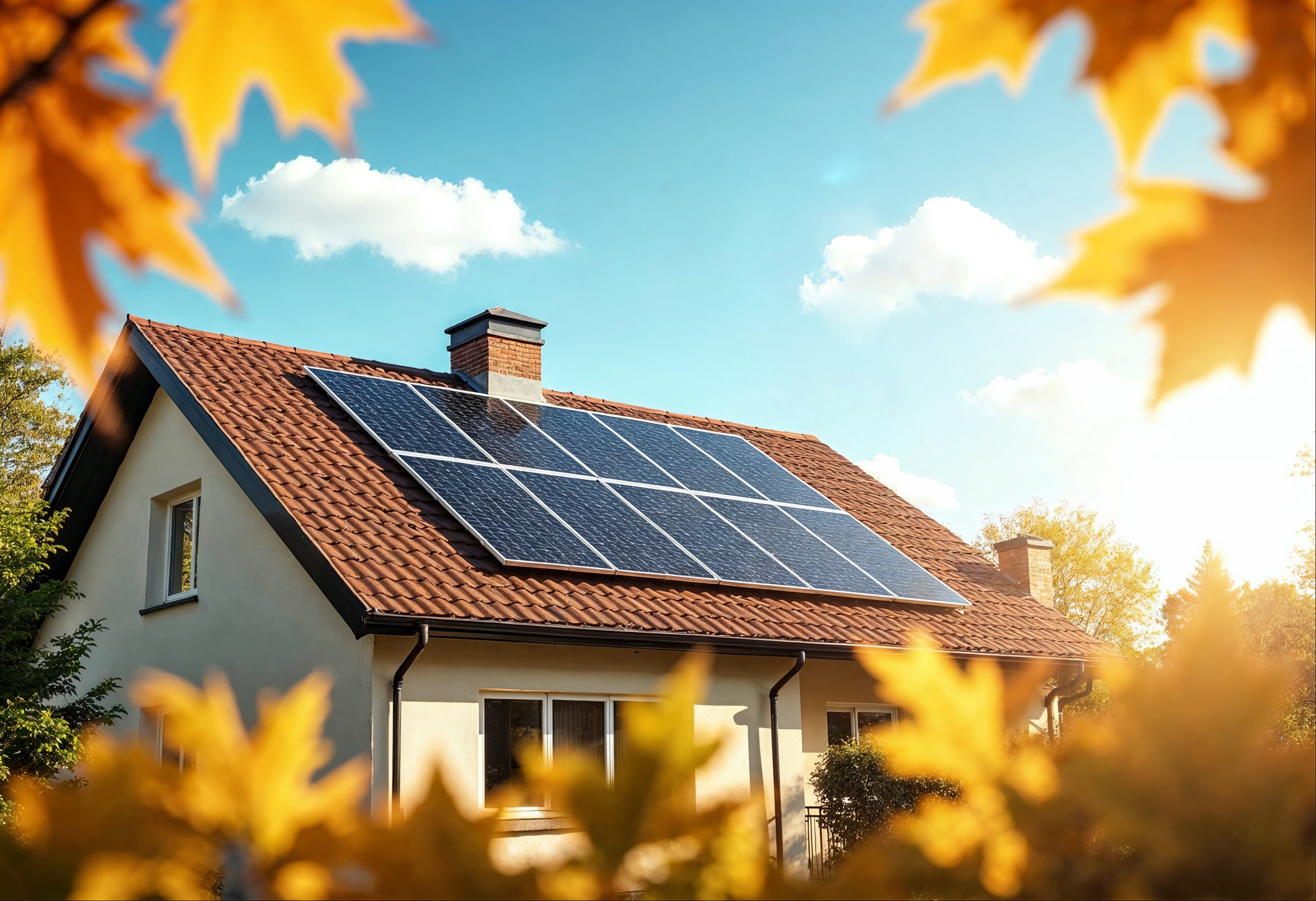
When you install an array, those panels take the brunt of the direct sunlight. They absorb the solar radiation to create electricity, leaving a pocket of shaded, cooler air between the panels and your actual roof structure. This thermal barrier prevents extreme heat from penetrating your attic. As a result, your HVAC system does not have to fight a constant downward push of heat. It runs less frequently, experiences less mechanical wear and tear, and cools your home much faster.
Offsetting the Modern Phantom Load
Homes today are smarter than ever, but that intelligence comes with a hidden cost. We have video doorbells, programmable thermostats, connected appliances, and security cameras streaming data around the clock. Even when you are sleeping, your house is quietly humming along, drawing a continuous stream of electricity.
Energy experts call this the phantom load. While a single smart speaker does not use much power on its own, dozens of connected devices operating twenty-four hours a day add up to a noticeable chunk of your monthly bill. Generating your own energy during the daytime perfectly offsets this continuous drain. Instead of paying the utility company to keep your Wi-Fi router and smart fridge connected while you are at work, your roof handles the background maintenance of your modern lifestyle for free.
Beating the Peak Demand Trap
Utility companies have become very strategic with how they charge you. Many have shifted to time-of-use pricing models. This means electricity is cheap in the middle of the night but incredibly expensive in the late afternoon and early evening. Unfortunately, that late afternoon window is exactly when everyone gets home from work, turns on the oven, cranks up the air conditioning, and runs the washing machine.
Your house is naturally designed to need the most energy exactly when it is the most expensive to buy. A well-designed setup, especially when paired with a home battery system, completely shields you from this pricing trap. During the middle of the day when the sun is at its peak, your system produces more energy than your empty house needs. That excess power is stored in the battery. Then, when the utility company spikes its rates in the evening, your house automatically switches over to the stored battery power. You get to run your heavy appliances during the busiest part of the day without pulling a single expensive kilowatt from the grid.
Changing Your Daily Habits Naturally
There is a fascinating psychological shift that happens when you start producing your own electricity. Traditional energy usage is invisible. You flip a switch, the light comes on, and you do not think about the cost until the bill arrives a month later.
Most modern systems come with a monitoring app that shows you exactly how much power you are producing and consuming in real-time. When you can literally see the spikes in your energy usage on a screen, you naturally become more mindful of how your house operates. You start running the dishwasher at noon to take advantage of peak sunlight instead of running it at midnight. You become acutely aware of how much power your dryer uses, prompting you to be more strategic with laundry day. The technology creates a feedback loop that trains you to run your household with far greater precision.
A Smarter Way to Live
True home efficiency is not about living in the dark or constantly stressing over the thermostat. It is about equipping your property with the tools it needs to sustain itself. By capturing the sunlight hitting your roof, you protect your home from grid instability, reduce the physical wear and tear on your major appliances, and completely neutralize the rising costs of modern living. It is a practical, permanent upgrade that allows you to enjoy the comforts of your home without the financial anxiety that usually comes with it.